


The Martini: A Cocktail with a Mysterious Past

Updated: Aug 25
Few cocktails are as instantly recognizable as the martini. A chilled glass, gin and vermouth, finished with an olive or a twist of lemon—it is a drink that has become synonymous with sophistication and cocktail culture.
For such a seemingly simple cocktail, however, the martini has a surprisingly complicated history. Even its birthplace remains a matter of debate, which is perhaps fitting for a drink that would eventually find its way into the mysteries of Agatha Christie.

A Mysterious Beginning
Like any good mystery, the story of the martini begins with memorable hook. Where did it actually originate?
One of the most colorful origin stories places us in Martinez, California, during the Gold Rush. According to the history preserved by the City of Martinez, a miner who had struck it rich was making his way back toward San Francisco in 1849 when he stopped in Martinez to celebrate his good fortune. He entered a local bar and asked for Champagne, but there was one problem: they didn't have any.
Instead, the bartender offered the miner something different—a drink he called the “Martinez Special.” The miner apparently enjoyed his discovery enough that, when he continued to San Francisco, he ordered the drink again and explained how it was made.
The City of Martinez maintains that the Martinez eventually became known as the Martini and proudly claims the title “Birthplace of the Martini.” It is a wonderful story, but it isn't the only one.
Other accounts connect the Martinez to legendary bartender Jerry Thomas and San Francisco's Occidental Hotel, while another Martinez tradition credits local bartender Julio Richelieu. With records from the period incomplete, determining exactly who poured the first glass is difficult.
What the historical record does show is that, by the 1880s, drinks bearing the names Martinez and Martini were appearing in bartending manuals. O.H. Byron's 1884 Modern Bartender described the Martinez as essentially a Manhattan with gin substituted for whiskey. A few years later, Harry Johnson's 1888 Bartender's Manual included an early recipe called a Martini.
If you ordered one of those early martinis, however, you might be surprised by what arrived. Early versions included ingredients such as Old Tom gin, sweet vermouth, curaçao, bitters, and even sugar syrup. The City of Martinez's historical recipe similarly includes Old Tom gin, vermouth, maraschino liqueur, bitters, and lemon.
That's quite a journey from the crisp gin-and-dry-vermouth cocktail sitting at today's bar.
How the Martini Became Dry
As the 19th century gave way to the 20th, the cocktail began to change. Dry gin and dry vermouth became increasingly prominent, sweeter ingredients gradually disappeared, and the proportions shifted. What had once been a relatively sweet and complex cocktail became cleaner, drier, and simpler.
The Dry Martini had begun to emerge.
Over the following decades, bartenders and drinkers continued experimenting with the ratio of gin to vermouth. The result was something unusual: a cocktail with very few ingredients but seemingly endless variations.
Why Did the Martini Become So Popular?
Part of the answer may lie in that simplicity. At its core, a classic martini requires remarkably little: gin, vermouth, and a garnish.
Yet small changes create noticeably different drinks. More or less vermouth changes the character of the cocktail; an olive provides a savory note, while a lemon twist adds citrus oils. Add olive brine, and the drink moves in another direction entirely.
The martini could therefore be personalized without losing the characteristics that made it recognizable.
Timing mattered, too. By the early decades of the 20th century, cocktails had become fixtures of fashionable social life. Gin was particularly well suited to the cocktail culture of the period, and by the 1930s the increasingly dry martini had developed an image of elegance and sophistication.
That cultural backdrop brings us to another master of mystery.
The Martini Meets Agatha Christie 🔎
Agatha Christie's first novel was published in 1920, placing the beginning of her remarkable career directly within an era when modern cocktail culture was taking shape.
Many of the mysteries for which she became famous appeared during the 1920s and 1930s. Her characters gather in hotels, drawing rooms, restaurants, country houses, and dinner parties—settings where cocktails naturally became part of the social scene.
Sometimes a drink is simply part of the gathering; sometimes it becomes evidence.
One particularly memorable example appears in the Hercule Poirot mystery Three Act Tragedy. At a gathering hosted by celebrated actor Sir Charles Cartwright, Reverend Stephen Babbington suddenly becomes ill after drinking a cocktail and dies.
Naturally, the glass becomes part of the investigation. The martini glass is sent for chemical analysis, but investigators discover no trace of poison.
A cocktail, a sudden death, no apparent poison, and no obvious motive—it’s wonderfully Christie.
The martini isn't Christie's only connection to cocktail culture. Her stories reference Manhattans, Whisky Sours, Pink Gins, and other drinks of the period, giving modern readers another small glimpse into the social world her characters inhabited.
Gin or Vodka? Olive or Twist?
More than a century later, people are still debating the proper way to make a martini: gin or vodka, dry or dirty, olive or lemon twist, shaken or stirred?
For a cocktail containing so few ingredients, the martini inspires remarkably strong opinions. Perhaps that's one reason it has endured—it has evolved for generations without losing its identity.
Raise a Glass to the Queen of Mystery
This September, we're bringing a little of that mystery to Wandering Whistler Cafe in Effingham, Illinois.
In celebration of Agatha Christie's birthday, join us for A Most Mysterious Evening, an evening inspired by mysteries, detectives, and the Queen of Mystery herself. Gather your fellow sleuths and put your powers of observation to the test with mystery games, detective puzzles, Sherlock-inspired touches, and a featured cocktail.
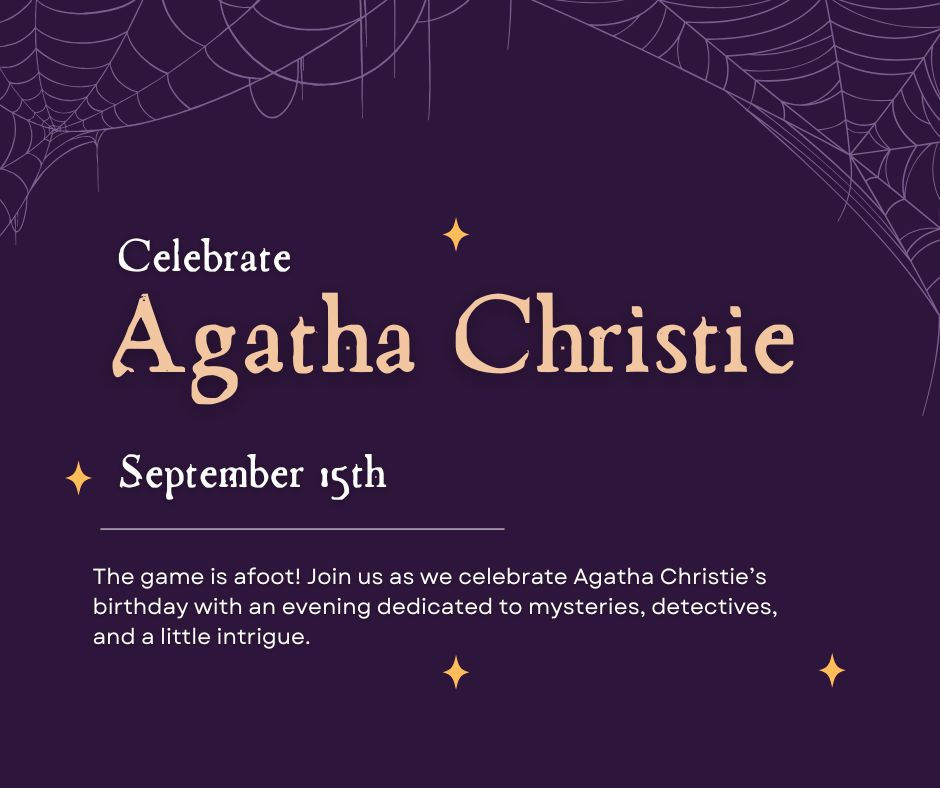
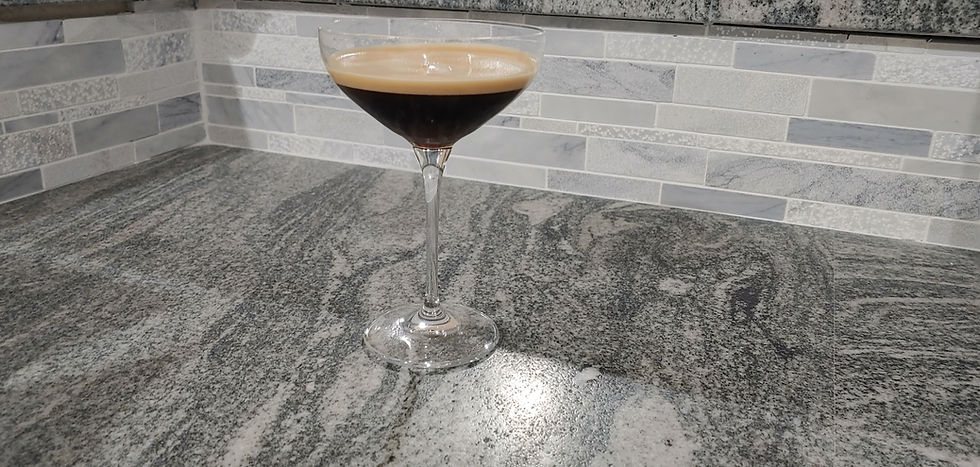
Of course, it seems only appropriate that a martini make an appearance.
Elegant, classic, and perhaps just a little suspicious, the martini is a fitting drink for an evening of mystery.
Whether you're an Agatha Christie reader, a cocktail enthusiast, a board-game detective, or simply looking for something different to do in Effingham, gather your flock and join us for an evening of mystery—and remember to keep an eye on your glass.
Sources & Further Reading
City of Martinez, California: The Martini Story
Agatha Christie Limited: Three Act Tragedy
Difford's Guide: Martini Cocktail and Its Evolution
Food52: The History of the Martini
Everything Agatha: Cocktails Featured in Agatha Christie's Works
This article was edited with AI


Comments